
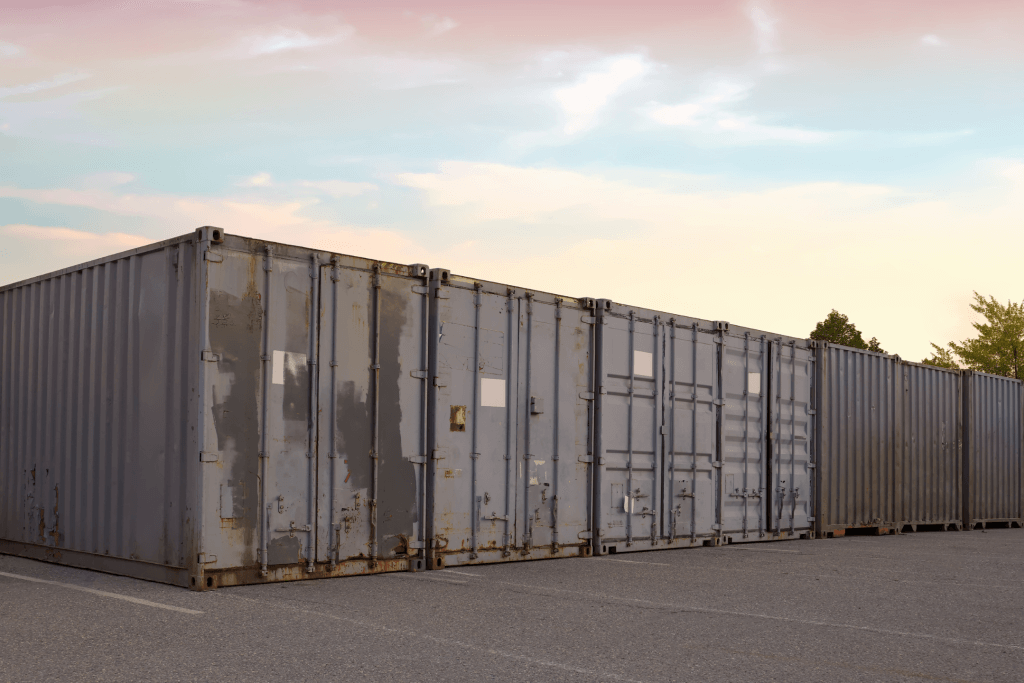
10 Smart Outdoor Storage Ideas for Growing Businesses
Your yard looked fine when you started. One truck, a trailer, some tools in the garage. Simple.
Fast forward a few years. Now you've got three trucks, two trailers, an excavator you bought at auction, pallets of materials for three different jobs, and a pile of stuff you keep meaning to organize. The driveway is a parking lot. The garage hasn't seen a car in years. Your spouse is making comments about the neighborhood looking like a construction zone.
Storage chaos isn't just an eyesore—it costs money. Time spent looking for equipment, damage from poor storage conditions, theft from unsecured areas, and municipal fines for code violations all hit the bottom line. A growing business needs storage systems that scale with it. Many contractors find that professional outdoor storage is the solution that lets them scale without the headaches.
Here are ten ideas that actually work, based on what we've seen from contractors who've figured this out.
1. Start with a Brutal Inventory Audit
Before you add more storage, know what you actually have. And I mean really know it.
Walk through everything you own. Every piece of equipment, every stack of materials, every pile of "we might need this someday" stuff. Make a list. Be honest about what you find.
Questions to ask:
- When did I last use this?
- Is it in working condition?
- Could I rent this cheaper than owning it?
- Am I keeping this because it's useful or because I forgot about it?
Most contractors who do this exercise find they're storing equipment they'll never use again. That excavator attachment for a machine they sold two years ago. Materials from jobs that are long finished. Tools that have been replaced by better versions.
Get rid of the dead weight. Sell what has value. Scrap what doesn't. Every item you store costs money in space, maintenance, and mental clutter. Only keep what earns its keep.
2. Categorize by Access Frequency
Not everything needs to be within arm's reach. Organize storage based on how often you actually need things:
Daily access items (prime real estate):
- Current job materials
- Commonly used equipment
- Everyday tools and supplies
- Vehicles in active rotation
These need to be easy to get to, easy to load, and positioned so you're not moving other things to reach them.
Weekly access items (secondary positioning):
- Equipment for upcoming jobs
- Backup tools and supplies
- Vehicles in less frequent rotation
- Materials you'll need soon but not today
These can be positioned behind daily items as long as you can still access them reasonably.
Seasonal or project-specific items (off-site candidates):
- Specialized equipment used occasionally
- Materials for future projects
- Archived records and documentation
- Equipment being held for potential sale
This is what off-site storage is for. You don't need 24/7 instant access to things you use twice a year.
3. Invest in Real Protection, Not Cheap Covers
A $50 hardware store tarp might keep rain off for a month. Then it tears, fades, and starts letting water pool in low spots that soak your equipment anyway. False economy.
Quality protection actually protects:
Equipment covers that work:
- Heavy-duty fabric rated for UV exposure
- Breathable materials that prevent condensation
- Custom sizing that actually fits without gaps
- Tie-down points that stay secure in wind
Environmental considerations for Phoenix:
- UV is your primary enemy—the sun destroys rubber, plastic, and paint
- Dust infiltration damages bearings, seals, and electronics
- Monsoon rains hit hard and fast—water protection must work instantly
- Temperature extremes stress batteries, fluids, and electrical systems
Expect to spend $200-500 on a quality cover for large equipment. It pays for itself the first time it prevents a repair that would have cost more.
4. Think Vertical When Ground Space Is Limited
Square footage costs money. Cubic footage is usually free.
Stacking strategies:
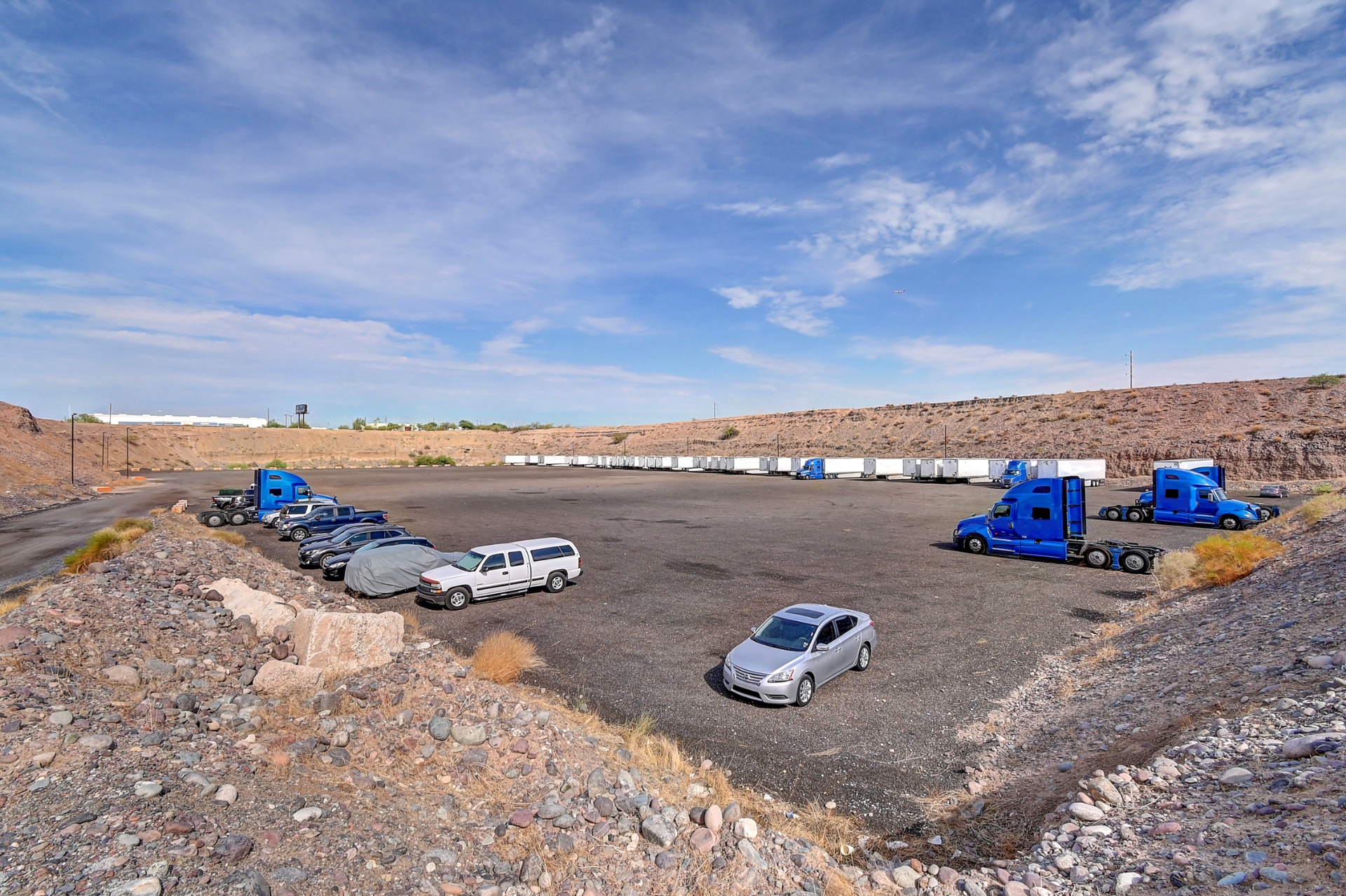
- Shipping containers stack safely when properly blocked
- Racking systems multiply storage capacity for smaller items
- Elevated platforms keep materials off wet ground
- Overhead structures in covered areas add usable space
Practical examples:
- A 40-foot shipping container stores what would otherwise require a 320 square foot building
- Wall-mounted racking in your shop triples small-parts storage
- Pallet racking turns one ground spot into three or four stacking levels
- Overhead storage in trailers keeps lighter items accessible without consuming floor space
Vertical storage works best for items that don't need frequent access. You're not going to stack and unstack containers daily, but for seasonal equipment, it's efficient.
5. Create Zones That Make Sense
A organized yard works like a well-planned warehouse. Everything has a place, and everyone knows where that place is.
Zone planning principles:
- Similar items together (all vehicles in one area, all materials in another)
- Traffic flow from entrance to exit without backtracking
- High-turnover items near the entrance
- Long-term storage toward the back
- Clear lanes for vehicle movement throughout
Sample zone layout:
- Zone A (near entrance): Active vehicles, daily-use equipment
- Zone B: Materials staging for current and upcoming jobs
- Zone C: Equipment in rotation but not daily use
- Zone D (back area): Long-term storage, seasonal items
- Loading area: Clear space with room for maneuvering
Mark zones with painted lines, signs, or other visual indicators. When your crew knows where things go, they actually put them there.
6. Track Everything Worth Tracking
"I know it's here somewhere" costs more than tracking systems.
Levels of tracking:
- Basic: Spreadsheet with location, last use, and condition
- Intermediate: Inventory management software with photos and descriptions
- Advanced: GPS trackers on high-value moveable equipment
- Comprehensive: Barcode or RFID systems with check-in/check-out
What to track for each item:
- Current location (zone, bay, or slot number)
- Condition and last maintenance date
- Value for insurance purposes
- Who last accessed it and when
- Expected return date if loaned out
For equipment over $10,000, GPS tracking pays for itself. A $200 tracker on a $50,000 excavator is cheap insurance. You know where it is, you can recover it if stolen, and you can prove its location for insurance claims.
7. Use Off-Site Storage Strategically
Your home base can't hold everything, and it shouldn't try to. Off-site storage handles what doesn't need to be on-site.
Good candidates for off-site storage:
- Seasonal equipment (holiday lighting trailers, snow equipment, specialty attachments)
- Backup vehicles not in current rotation
- Materials for future phases of long-term projects
- Equipment between jobs when you don't have space at home base
- Items too large for your current facility
Selecting off-site storage:
- Location relative to where you'll actually need the items
- Security appropriate to the value of what you're storing
- Access hours that match when you'd actually need things
- Cost compared to the value of freeing up space at your home base
The math often works out better than expected. Space at your home base has value—for active equipment, for operational room, for not annoying your neighbors. Off-site storage handles the overflow at rates lower than expanding your home facility.
8. Maintain Clear Movement Lanes
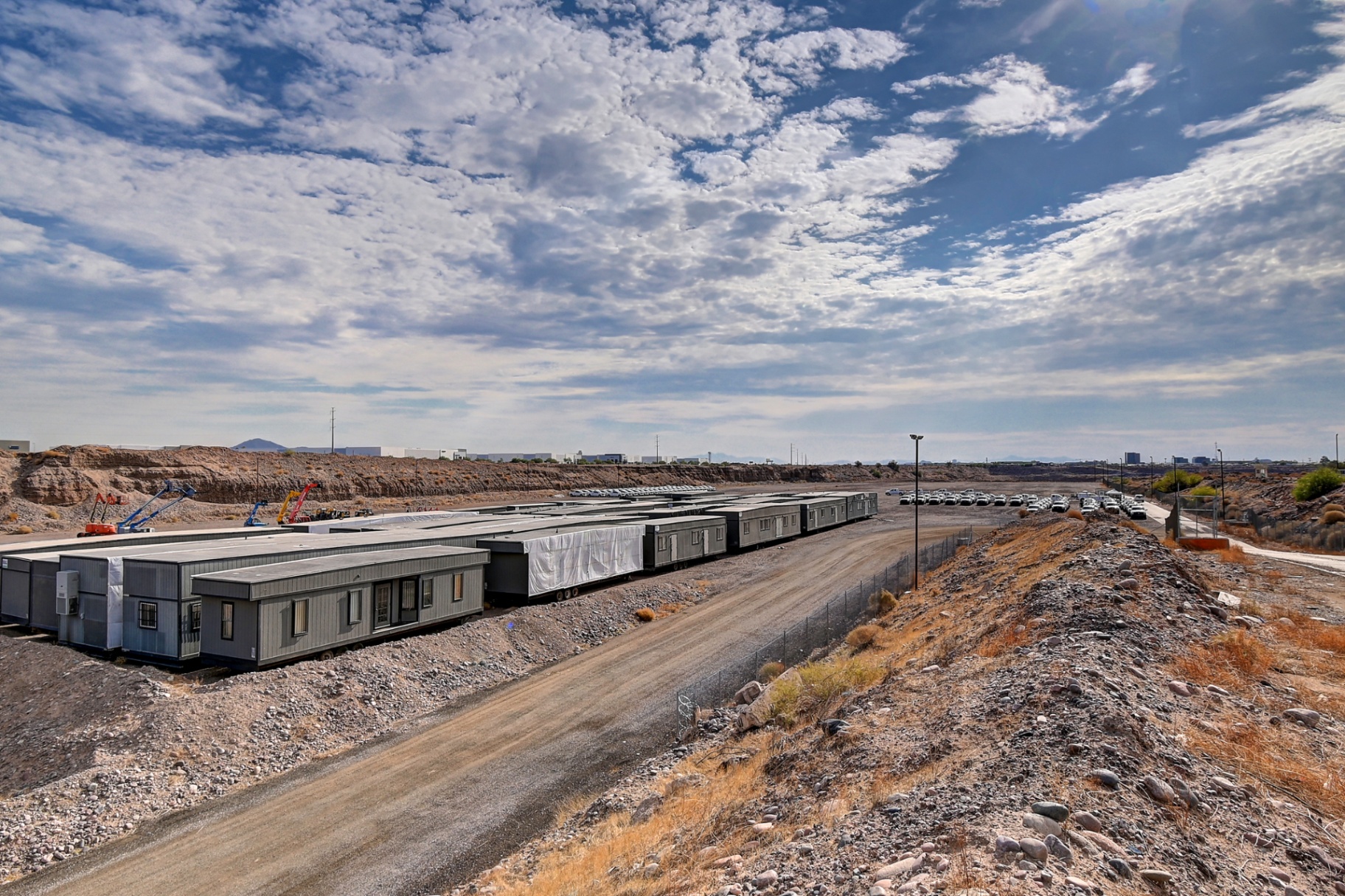
A packed yard is an inefficient yard. Equipment that's blocked by other equipment takes twice as long to access.
Lane requirements:
- Width for your largest vehicle plus maneuvering room
- Clear sight lines for backing
- No encroachment from stored items
- Regular inspection to prevent creep
Common violations:
- Materials staged "temporarily" in the lane
- Equipment parked "just for a minute"
- Gradual narrowing as new items arrive
- Vegetation or debris reducing usable width
Set the standard that lanes are sacred. Anything in a lane gets moved immediately. No exceptions, no "just for today."
9. Build Maintenance into Your System
Storage isn't park-and-forget. Equipment deteriorates whether you're using it or not.
Weekly checks:
- Walk through all stored equipment
- Look for obvious problems (flat tires, fluid leaks, storm damage)
- Verify security (locks intact, covers in place)
- Clear any debris or vegetation growth
Monthly maintenance:
- Start engines and run to operating temperature
- Cycle hydraulics through full range of motion
- Check battery voltage on items without trickle chargers
- Inspect covers and replace as needed
Seasonal deep dive:
- Full equipment inspection before returning to service
- Fluid changes on items that have been sitting
- Battery replacement as needed
- Detailed condition documentation
Build these checks into someone's regular duties. Accountability matters—if it's everyone's job, it's no one's job.
10. Plan for the Next Stage, Not Just Today
Your storage needs will change. Plan for where you're going, not just where you are.
Questions to ask:
- What's my realistic growth trajectory for the next 2-3 years?
- What equipment will I add? What will I outgrow?
- Is my current location capable of scaling, or will I need to move?
- What relationships should I build now with storage providers?
Practical steps:
- Build flexibility into storage arrangements (month-to-month vs. long-term)
- Don't max out your space—leave room for expansion
- Know your options before you need them
- Budget for storage as a line item, not an afterthought
Storage capacity constraints have killed growth for contractors who didn't plan ahead. When you can't take on a new job because you have nowhere to stage the equipment, that's a planning failure with real financial consequences.
Making It Work
These ten ideas work together. An inventory audit informs your zoning. Tracking systems support maintenance schedules. Off-site storage creates room for daily operations.
Start with the audit. Know what you have. Then build systems that keep things organized, accessible, and protected.
Storage done right becomes invisible—you have what you need when you need it without thinking about logistics. Storage done wrong steals hours every week in searching, shuffling, and dealing with problems that could have been prevented.
Your business has better things to do than fight with storage chaos. Fix it once, build good habits, and move on to work that actually grows the business.
Need help organizing your equipment storage? Paddock Parking offers flexible outdoor storage solutions for contractors in Phoenix. Contact us to discuss your needs.
Ready to Secure Your Storage?
Contact Paddock Parking today to learn about our secure outdoor storage solutions in Phoenix.