Secure Commercial Transport Storage Access for Fleets
Fleet operations don't sleep. Drivers head out before sunrise. Trucks roll back after midnight. Deliveries run weekends. Emergencies happen at 2 AM on holidays.
If your fleet storage has access limitations—hours that don't match your operations, gates that require staff to open, or security systems that make night access a hassle—you're paying for it in inefficiency every single day.
The right storage solution works around your schedule, not the other way around. Here's what that actually looks like for commercial fleet operations.
Why Access Hours Matter More Than You Think
The obvious reason: you need to get to your vehicles when you need them. But the hidden costs of access friction add up in ways many fleet operators don't track.
The Morning Rush Problem
Your dispatch calls at 5:30 AM with an urgent load. The driver heads to the yard, but the gate doesn't open until 6:00. That 30-minute wait happens three times a week. Over a year, that's 78 hours of driver downtime—almost two full work weeks wasted sitting at a gate.
At an average driver cost of $25/hour, that's nearly $2,000 in wages paid for nothing. Add the missed revenue from loads that couldn't be picked up in time, and the cost multiplies.
Late Returns and Security Trade-offs
Drivers who finish routes late face a choice: return to a facility with poor night access or find somewhere else to park. "Somewhere else" often means a truck stop, a customer's lot, or the side of a road. None of these are secure. Equipment theft, cargo theft, and vehicle damage happen when trucks park in uncontrolled environments.
One stolen catalytic converter. One broken window. One cargo theft. The cost of any single incident usually exceeds what you'd save in a year of choosing cheap storage over proper storage.
Weekend and Holiday Operations
Many fleets run continuous operations. Retail deliveries, construction logistics, refrigerated transport—work doesn't stop for weekends. Storage that limits weekend access limits your operational flexibility.
The question isn't whether you need weekend access now. It's whether you want to be locked into storage that can't accommodate growth into weekend operations later.
What Real 24/7 Access Looks Like
"24/7 access" appears in nearly every storage facility's marketing. The reality varies dramatically.
Access System Reliability
The best access technology is worthless if it doesn't work consistently.
Questions to ask:
- What's the system uptime? Any facility should track this.
- When was the last significant outage? What caused it?
- What's the backup entry process if the primary system fails?
- How quickly are access issues resolved?
Red flags:
- Staff can't answer basic questions about system reliability
- No backup entry process exists
- Recent or frequent outages mentioned casually
- Access requires calling staff who may not answer
Test the system before committing. Visit at different times. Try your code at 11 PM. If there are issues during your evaluation, expect more issues as a customer.
Nighttime Conditions
Access is useless without safety. Drivers need to feel secure entering and moving through the facility at any hour.
Lighting requirements:
- Coverage across the entire lot, not just the entrance
- Brightness sufficient for camera footage and personal safety
- No dark corners or shadowed areas
- Motion-activated lighting adds security
Surface conditions:
- Clear lane markings visible at night
- Maintained surfaces without hazardous potholes
- Proper drainage to prevent flooding during monsoons
- Snow and ice management (less relevant for Phoenix, but applicable for some operations)
Support When You Need It
Problems happen. Access codes stop working. Gates malfunction. Drivers need assistance. What happens at 3 AM when something goes wrong?
Support levels:
- Basic: Emergency phone number (may or may not be answered)
- Better: On-call staff with response time commitments
- Best: 24/7 staffed facilities with immediate assistance available
For most commercial operations, having a guaranteed response within a reasonable timeframe (30-60 minutes) is sufficient. True 24/7 staffing adds significant cost and usually isn't necessary unless you're running constant operations with frequent issues.
Fleet-Specific Storage Considerations
Individual vehicle storage is straightforward. Fleet storage introduces complexity that general storage facilities often don't anticipate.
Space Planning for Multiple Vehicles
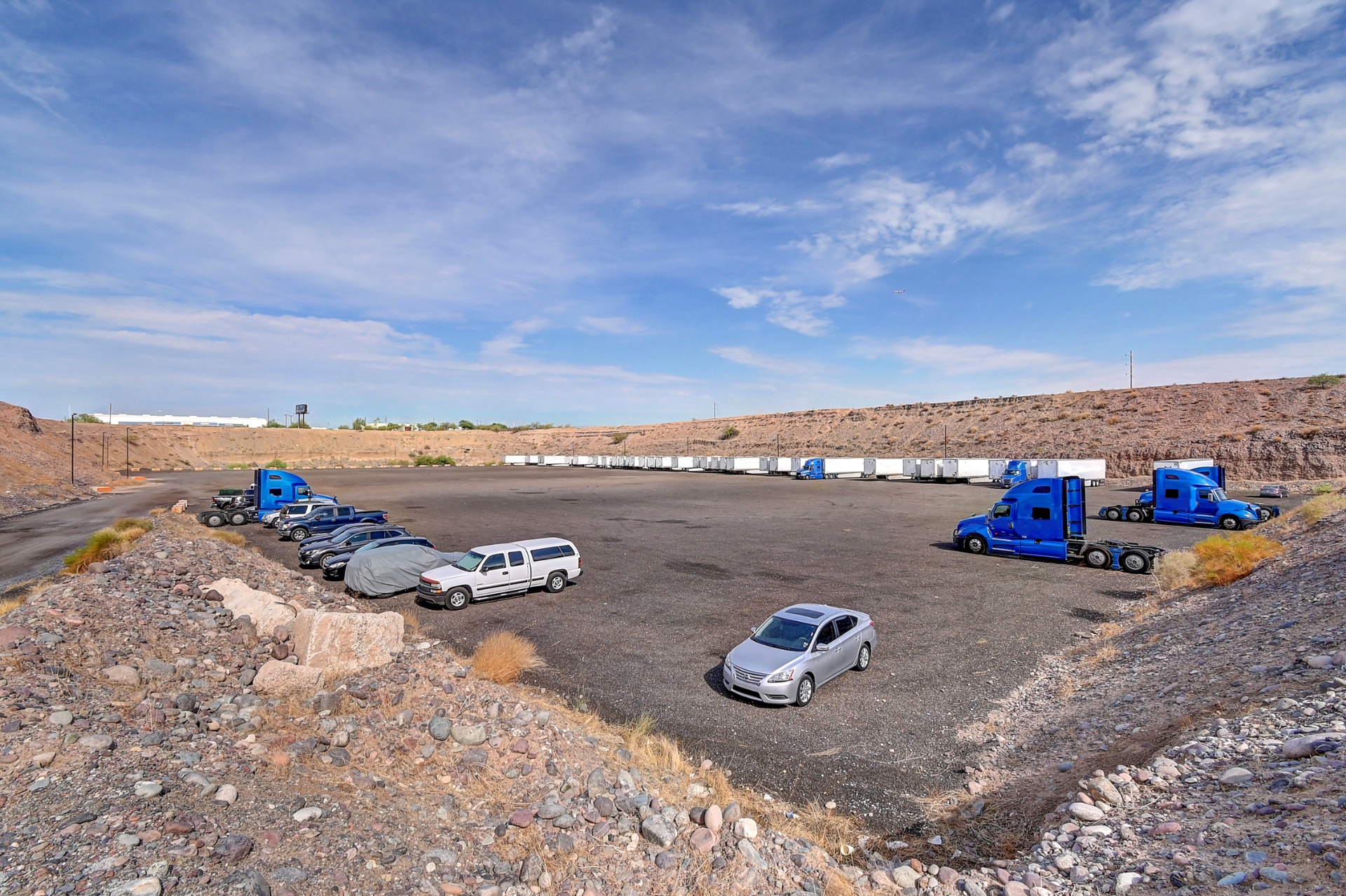
One semi-truck needs approximately 600-800 square feet, including maneuvering room. Ten trucks need 6,000-8,000 square feet—nearly an acre. Twenty trucks double that.
Space calculation factors:
- Vehicle footprint (length × width)
- Maneuvering clearance for each vehicle type
- Traffic flow between spaces and to/from the exit
- Staging area for loading/unloading if needed
- Growth capacity beyond current fleet size
A yard that's tight for your current fleet will be impossible if you add two vehicles. Plan for where you're going, not just where you are.
Traffic Flow Engineering
Multiple drivers accessing the same facility creates traffic patterns. Poor layout creates congestion, accidents, and wasted time.
Effective flow design:
- Clear entry and exit routes (ideally separate)
- One-way lanes where space permits
- Adequate turning radius for your largest vehicles
- Staging areas that don't block main lanes
- Logical parking assignments (frequent-access vehicles near the entrance)
Walk through the layout mentally with your typical morning departure sequence. Can five drivers get out within 15 minutes without blocking each other? If not, the layout needs work.
Designated vs. General Parking
Two models exist:
Assigned spaces:
- Each vehicle has a specific location
- Drivers know exactly where to go
- Space reserved even when vehicle is out
- Premium pricing for guaranteed reservation
General parking:
- First-come, first-served
- Lower cost per space
- May not have room during busy periods
- Requires flexible dispatch
For commercial operations, assigned spaces usually make sense despite the premium. The operational consistency outweighs the cost difference. Your dispatcher knows exactly where each vehicle is. Drivers don't waste time hunting for spots. You pay for capacity you actually need.
Security Appropriate for Fleet Value
A 10-truck fleet represents $500,000 to $1,500,000 in vehicle value alone. Add cargo, tools, and equipment stored in trailers, and the exposure grows significantly.
Vehicle Protection
Beyond basic perimeter security:
Physical deterrents:
- Wheel locks for high-value trailers
- Kingpin locks for semi-trailers
- GPS tracking with geofencing alerts
- Visible camera coverage of each parking area
Access control:
- Individual driver codes with entry logging
- Code deactivation for terminated employees
- Visitor/vendor access procedures
- Separation of driver access from facility-wide access
Documentation:
- Entry/exit logging for each vehicle
- Camera footage retention (minimum 30 days)
- Incident reporting procedures
- Insurance-required security documentation
Cargo and Equipment Security
Many fleets store loaded trailers overnight. The cargo may be worth more than the trailer.
Cargo protection considerations:
- Camera angles that capture trailer doors
- Trailer seal verification upon entry
- Secure areas for high-value loads
- Procedures for reporting seal breaks or tampering
For high-value cargo operations, discuss specific security arrangements with the facility. Generic storage security may not meet your insurance requirements or your risk tolerance.
Lease Structures for Fleet Operations
Fleet size fluctuates. Contracts, seasons, and market conditions change how many vehicles you run. Storage agreements should accommodate this reality.
Month-to-Month vs. Annual
Month-to-month advantages:
- Add or reduce space quickly
- Exit if the facility doesn't meet needs
- Flexibility for seasonal operations
- No long-term commitment risk
Annual agreement advantages:
- Lower per-space rates (typically 10-20% discount)
- Rate locked for the term
- Priority for space during high-demand periods
- Relationship benefits with facility management
For stable fleets, annual agreements make financial sense. For growing or fluctuating operations, the month-to-month premium is worthwhile flexibility.
Scaling Provisions
What happens when you need to add vehicles?
Questions to ask:
- Is additional space available at current rates?
- What notice is required to add spaces?
- Is there a waiting list for expansion?
- Can you reduce space if needs decrease?
The best time to negotiate expansion terms is before you sign the initial agreement. Getting it in writing protects you when you actually need the space.
Fleet Pricing
Volume should get you a discount. How much depends on the market and facility utilization.
Typical fleet discounts:
- 5+ vehicles: 5-10% discount
- 10+ vehicles: 10-15% discount
- 20+ vehicles: 15-20% discount or negotiated rates
These are guidelines, not guarantees. In tight markets with high demand, discounts are smaller. In soft markets, operators negotiate harder.
Evaluating Facilities for Fleet Storage
The checklist for fleet storage builds on general storage evaluation but adds fleet-specific considerations.
Physical Evaluation
Walk the facility during your typical peak access times:
- Is there congestion during morning departure?
- Can large vehicles maneuver effectively?
- Are surfaces in good condition for heavy use?
- Is lighting adequate for all operating hours?
Operational Questions
Talk to the operator about fleet operations specifically:
- How many other fleets store here?
- What's the largest fleet using the facility?
- Have you had access issues affecting fleet operations?
- What's your capacity for fleet expansion?
Reference Checks
Ask for references from other fleet operators:
- How long have they used the facility?
- Have they experienced access problems?
- How responsive is management to fleet-specific needs?
- Would they recommend it for fleet storage?
Making the Decision
Fleet storage is infrastructure. Like any infrastructure investment, the decision affects operations daily for as long as you use it.
Cheap storage with access problems costs more than premium storage with reliable access. The math is straightforward when you account for driver downtime, vehicle damage, theft exposure, and operational friction.
Find a facility that matches your operational requirements. Test the access before committing. Get the terms you need in writing. And build a relationship with facility management—when problems arise, relationships matter.
Your fleet runs on access. Choose storage that never gets in the way.
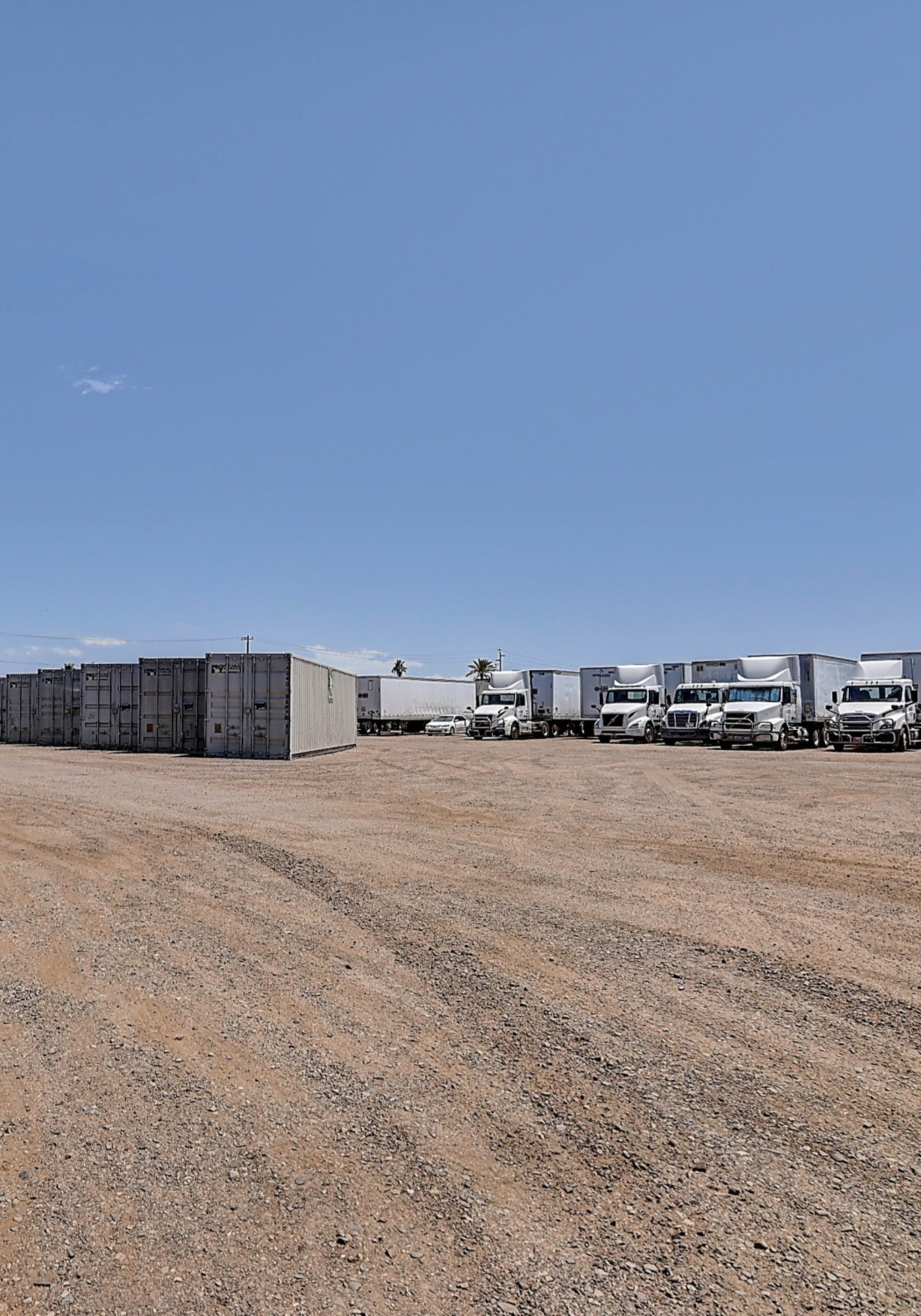
Paddock Parking provides truck and trailer storage with true 24/7 access at our Phoenix locations. Get in touch to discuss your fleet storage needs.
Ready to Secure Your Storage?
Contact Paddock Parking today to learn about our secure outdoor storage solutions in Phoenix.