Outdoor Storage for Contractors: Permits, Rules and Risks
Every contractor knows the headache of finding somewhere to put their stuff. Trucks, trailers, excavators, materials—it all needs to go somewhere when it's not on a job site. And for most contractors, the solution starts with whatever's convenient: their own property, a buddy's lot, an empty field somewhere.
That works until it doesn't. And when it stops working, the problems come fast: code enforcement notices, angry neighbors, insurance claims denied, equipment stolen. We've watched contractors dig themselves into holes that cost thousands to climb out of, all because they didn't understand the rules around outdoor storage.
This isn't about scaring you. It's about laying out the reality so you can make smart decisions.
The Zoning Problem Most Contractors Ignore
Here's what catches people off guard: you can't just store commercial equipment anywhere. Most residential and many commercial zones have specific rules about outdoor storage of vehicles and equipment.
What Zoning Actually Means for You
In the Phoenix metro area, zoning codes classify properties by use. Residential zones generally prohibit commercial vehicle storage. Even if you own the property, parking your dump trucks in your backyard can trigger code violations. Commercial zones vary—some allow outdoor storage, some don't, and some require conditional use permits.
The City of Phoenix requires a Special Permit for outdoor storage in most commercial zones. That permit process involves site plans, neighbor notifications, and public hearings. It can take months and cost thousands in application fees and engineering work.
We've seen contractors lease commercial property for storage only to discover it wasn't properly zoned. They spent money improving the lot, moved their equipment in, and then got hit with violations. Some had to move everything within 30 days or face escalating fines.
When Residential Storage Becomes Illegal
A lot of contractors start out working from home. One truck becomes two, then a trailer, then some equipment. Before long, the driveway and front yard look like a construction staging area.
Neighbors complain. Code enforcement shows up. And suddenly you're facing daily fines that can run $100 to $500 per violation until you fix the problem. In some Phoenix municipalities, repeated violations can result in misdemeanor charges.
The rules typically cover:
- Number of commercial vehicles allowed (often one or zero)
- Size limits for vehicles stored at residential properties
- Restrictions on equipment visible from the street
- Prohibitions on storing materials or supplies
Even if you're not in a homeowners association, city and county codes apply. And if you are in an HOA, those rules typically add even more restrictions on top of municipal codes.
The Liability Trap
Storing equipment on property you control sounds simple enough. But liability follows that equipment wherever it sits.
Premises Liability
If someone gets hurt on your property—whether it's your employee, a delivery driver, or a trespasser—you may be liable. Kids climbing on equipment, people tripping over materials, vehicles backing into each other—all of it can result in claims against you.
Your homeowner's insurance probably excludes commercial activities. Your general liability policy may exclude incidents on property you own but haven't listed as a business location. The gaps in coverage are where the lawsuits land.
Equipment Theft and Insurance Gaps
Here's a scenario we see regularly: contractor stores $200,000 in equipment at their home or on leased land. Thieves cut the fence, load up a trailer, and disappear with an excavator and two skid steers.
The contractor files a claim. The insurance company investigates. They discover the equipment was stored at an unscheduled location without the security measures required by the policy. Claim denied.
Insurance policies have specific requirements about where equipment can be stored. Many require:
- Fencing of specific height and construction
- Surveillance systems
- Lighting levels
- Locked gates with specific access controls
- Scheduled locations listed on the policy
Store your equipment somewhere that doesn't meet these requirements, and you may be self-insuring without knowing it.
Environmental Compliance
Contractors deal with materials that have environmental implications. Fuel, hydraulic fluid, solvents, paints, lubricants—storing these improperly creates liability that can follow you for decades.
The Cost of Contamination
Diesel leaks from a fuel tank. Hydraulic fluid drips from stored equipment. Over time, these fluids migrate into the soil. When that property is eventually sold or inspected, soil testing reveals contamination.
Who pays for cleanup? Whoever caused it, plus the current property owner, plus potentially previous owners and tenants. Environmental liability doesn't disappear when you move out. The EPA and state environmental agencies can pursue responsible parties for cleanup costs that run into hundreds of thousands of dollars.
We've seen contractors named in environmental lawsuits over properties they stored equipment on ten years earlier. The contamination was discovered during development, testing traced it to petroleum products, and the paper trail led back to the contractor who used the site.
What Regulators Look For
Arizona's Department of Environmental Quality has authority over storage of hazardous materials. They look for:
- Secondary containment for fuel storage
- Proper handling of used oil and fluids
- Prevention of stormwater contamination
- Spill response procedures
- Documentation of waste disposal
A contractor yard that's just a fenced lot with equipment probably doesn't meet these requirements. That's fine until there's a spill, a neighbor complains, or the property gets inspected for some other reason.
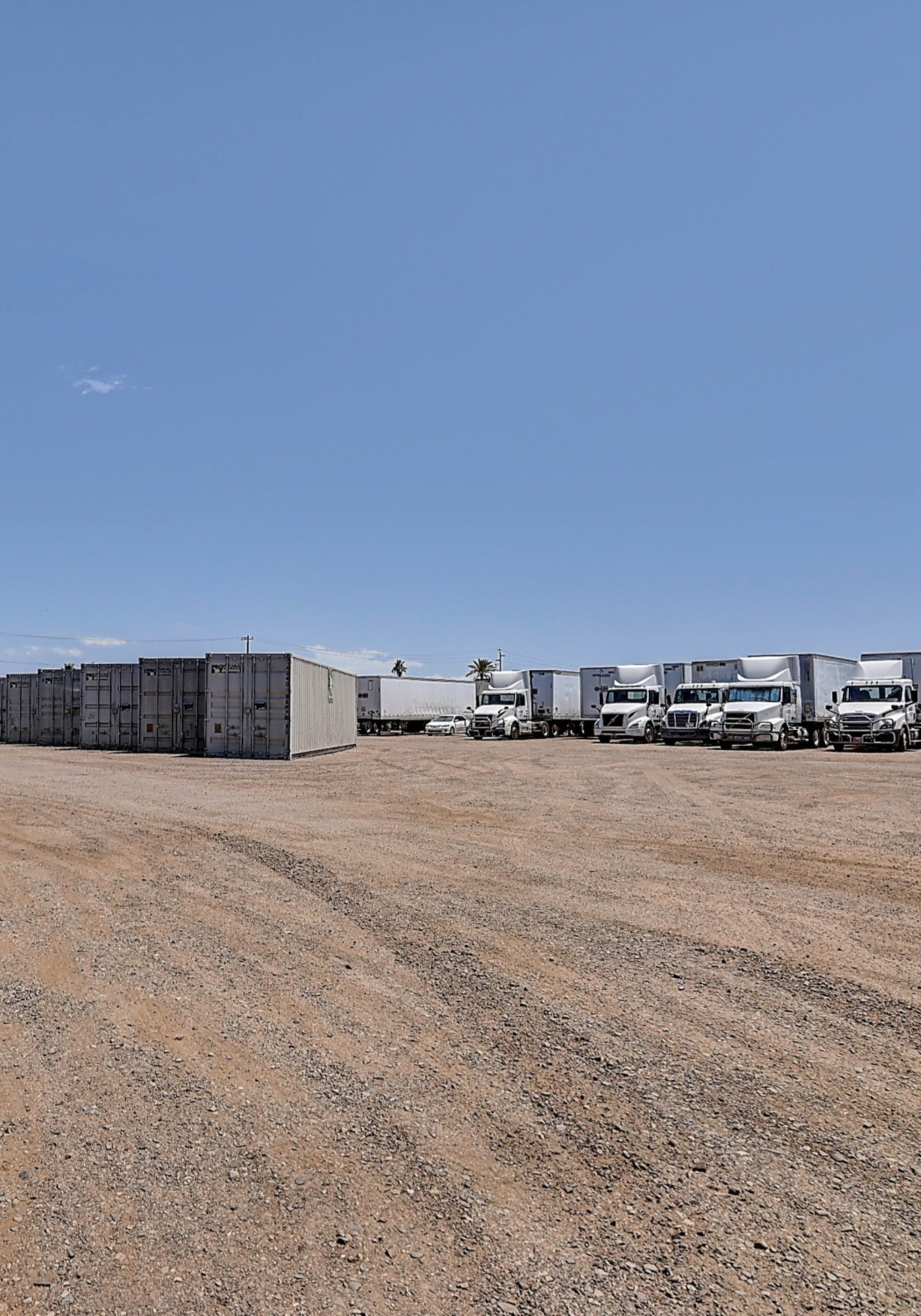
The Permit Process Explained
If you want to set up your own storage yard legally, here's what you're looking at in the Phoenix area:
Conditional Use Permits
Most commercial zones require a conditional use permit (CUP) for outdoor storage. The process typically includes:
- Pre-application meeting with city planning staff
- Preparation of site plans showing layout, access, and screening
- Application submission with fees ($500 to $2,000+)
- Staff review (4-8 weeks)
- Neighbor notification
- Public hearing before planning commission
- Council approval in some cases
- Permit issuance with conditions
Conditions often include requirements for landscaping, fencing height and materials, screening from adjacent properties, paving, dust control, drainage, and hours of operation.
The Real Timeline and Cost
From start to finish, expect 3-6 months minimum. Add time if neighbors object or if your application needs revisions. Costs include application fees, engineering for site plans, potentially a traffic study, landscaping plans, and improvements required by permit conditions.
Total investment before storing your first piece of equipment: easily $10,000 to $50,000 or more depending on site conditions and permit requirements.
That math is why most contractors use commercial storage facilities instead of developing their own yards.
How Professional Storage Solves These Problems
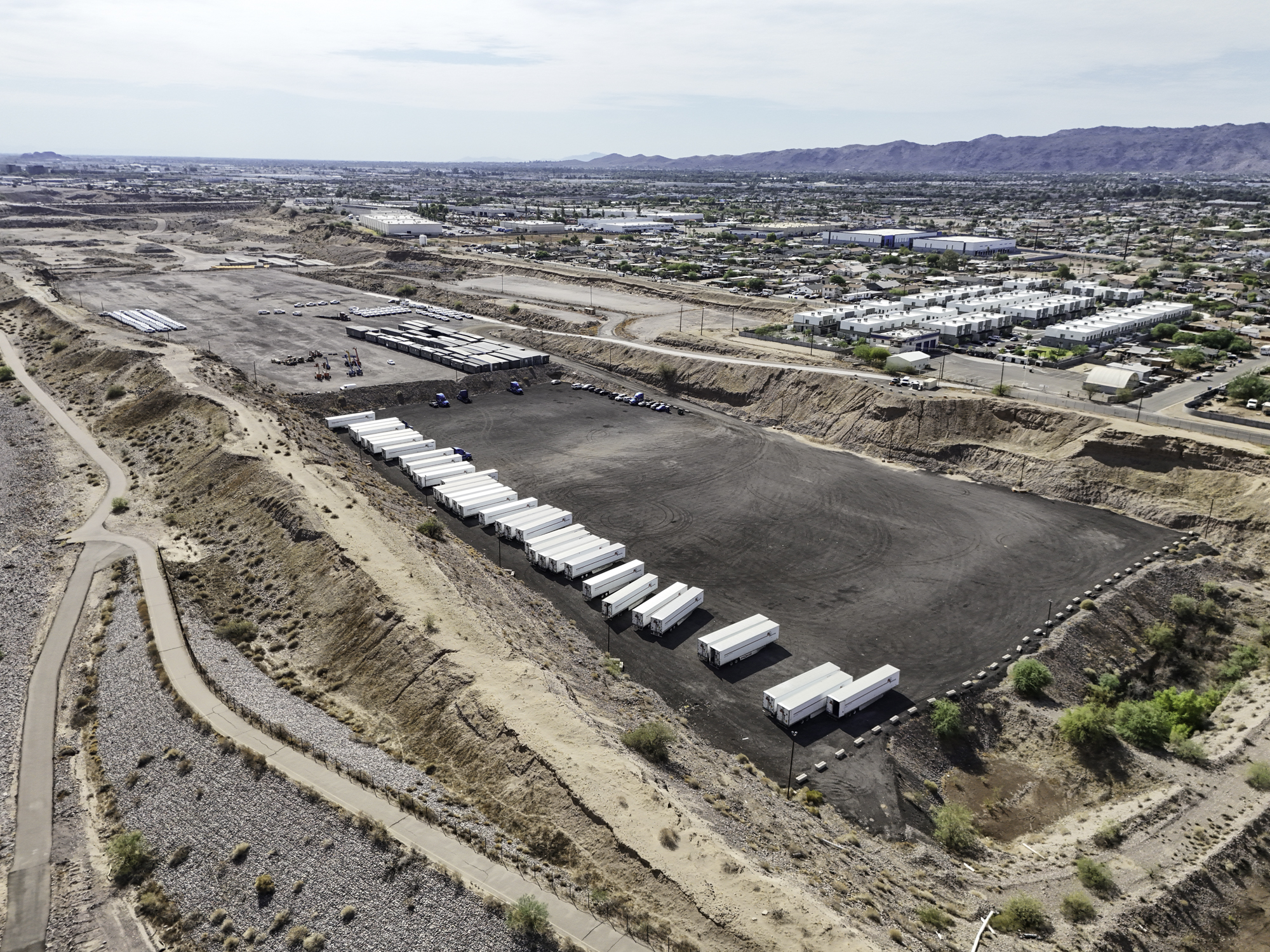
This isn't a sales pitch—it's math. Professional storage yards like ours exist because we've already solved the problems contractors would otherwise have to solve themselves.
Zoning and Permits: Already Done
Our facilities are properly zoned for outdoor storage. We went through the permit process, met the conditions, and maintain compliance. When you store with us, you inherit that compliance without any of the work or expense.
Insurance-Compliant Storage
We maintain the security infrastructure that insurance companies require: fencing, gates, surveillance, lighting. Your equipment stored with us meets the storage requirements your policy specifies. That means claims get paid when something goes wrong.
Liability Transfer
When your equipment is on our property, premises liability for the storage location is ours to manage. We carry insurance for it. You're still responsible for your equipment itself, but you're not liable for someone getting hurt in our parking lot.
Environmental Compliance Built In
We manage our facilities to prevent contamination. Proper drainage, containment areas, surface maintenance—all the things that prevent the slow drip of liability that can follow you for years.
Calculating the Real Cost
Here's how contractors typically think about storage costs: monthly rent times twelve equals annual cost. Simple math.
Here's the math they miss:
DIY storage on your own property:
- Fines for code violations: $100-500 per day until resolved
- Legal fees to fight citations: $2,000-10,000
- Property improvements to meet requirements: $5,000-50,000
- Time spent dealing with complaints and bureaucracy: countless hours
- Risk of insurance claim denial if equipment is stolen or damaged
DIY storage on leased land:
- Monthly lease: varies widely
- Improvements for fencing and security: $10,000-50,000
- Permit fees if required: $2,000-10,000
- Ongoing compliance maintenance: time and money
- Environmental liability if contamination occurs: potentially unlimited
Professional storage yard:
- Monthly rent: predictable
- Security and compliance: included
- Insurance compatibility: built in
- Environmental liability: managed by the facility
- Your time: freed up for actual work
The monthly rate at a professional yard almost always looks higher than DIY options. The total cost of ownership almost always goes the other way.
What to Ask Before You Sign
Whether you store with us or someone else, ask these questions:
- Is this location properly zoned for outdoor storage of commercial vehicles and equipment?
- What security measures are in place, and do they meet insurance requirements?
- Who is liable if my equipment is damaged or stolen?
- How is environmental compliance maintained?
- What happens if there's a spill or contamination?
- Are there any restrictions on hours of access?
- What's the total cost including all fees?
- What's the lease term, and what are the cancellation provisions?
Any reputable storage provider will answer these directly. Hesitation or vague answers are red flags.
The Bottom Line
Outdoor storage isn't complicated once you understand the rules. The problem is that most contractors don't understand them until they're already in trouble.
The rules exist for reasons—some more sensible than others—but they apply whether you agree with them or not. Ignoring them doesn't make them go away. It just means you're building business risk you don't need.
Professional storage is a business expense that pays for itself in problems avoided. The math works out, even when the monthly cost feels like overhead you'd rather not pay.
Store your equipment the right way, and it becomes one less thing to worry about. That's worth something. Looking for a compliant storage solution in Phoenix? Explore our storage locations or get in touch to learn more.
Ready to Secure Your Storage?
Contact Paddock Parking today to learn about our secure outdoor storage solutions in Phoenix.